“How do you want to be remembered?” The answer that changes everything
It was June 29th when Jack Selby asked Charlie Kirk: “If everything completely disappeared, how would you want to be remembered?”
The answer came without hesitation: “I want to be remembered for the courage of my faith. That would be the most important thing. The most important thing is my faith.”
Seventy-three days later, on September 10th, a bullet fired from a nearby rooftop at Utah Valley University ended that life at 31. Three months have passed. But that answer wasn’t buried with him. It continues to challenge us.
(If you have 2 minutes: read to the end. If you have 30 seconds: jump to “The Answer We’re Asked For”. But Kirk’s question deserves both.)
The Real Christmas Question (That Nobody Asks Anymore)
“What do you want?” asks consumerism.
“What do you want to be remembered for?” asks life.
It’s not the same question.
In the weeks leading up to Christmas, we all receive variations of the same question: “What do you want?” What do you want for Christmas. What are you expecting. What are you missing.
Kirk had flipped the perspective: “What do you want to be remembered for?”
The first question asks you to consume. The second asks you to build.
The first is about January. The second is about eternity.
The first speaks of desires. The second of identity.
A striking fact: The average American receives over 5,000 advertising messages per day (Forbes, 2024). All asking “What do you want?”. Zero asking “What do you want to be remembered for?”. Yet, according to Harvard research on positive psychology (2023), only the second question directly correlates with lasting fulfillment.
Pope Francis, a few months before his death, opening the Holy Door of the Jubilee Year we’re living, had said: “Often we stop only at the threshold; we don’t have the courage to cross it, because it challenges us.”
It challenges us. That’s why Kirk’s question still burns: because it crosses every threshold. It forces us to answer not what we want to have, but who we want to be.
The Necessary Restlessness (That Saves From Corruption)
Father Andrea Pronzato prayed like this: “Lord, I ask You for some torment, some restlessness, some remorse. At Christmas I’d like to find myself unsatisfied. Happy, but also unsatisfied.”
In an age that has made immediate gratification the only reasonable goal, asking for restlessness seems absurd.
Yet stagnant water is the first to rot. Same goes for lives.
On college campuses, Kirk didn’t bring pre-packaged certainties. He brought precise questions. “Prove me wrong” was written on his tent. He didn’t fear confrontation because he had gone through that restlessness himself.
Don Giussani taught that the educational risk consists in accompanying the other to confront total reality, not in providing answers that spare questions. Kirk did this: he didn’t spare questions. Not for himself, not for others.
The Natural Law That Unites Believers and Non-Believers
There’s something extraordinary: Charlie Kirk was evangelical, his wife Erika Catholic. He dialogued with bishops like Robert Barron. He was studying the Real Presence in the Eucharist. He was approaching the Catholic Church.
But on campuses he didn’t quote verses as ideological weapons. He used natural reason. He posed devastatingly simple questions: “If there’s no objective truth, on what basis do you found morality? If everything is subjective, why should I respect your rights?”
Stefano Fontana wrote: “Kirk’s message was based on universal natural law.” The one that says certain things are true before any religion. That killing innocents is wrong. That lying destroys. That every life has dignity.
It’s the same foundation Pope Francis recalled when speaking of “dialogue based on reason.” The same basis on which Thomas Aquinas dialogued with Muslims and Jews in the 13th century.
Truth doesn’t divide. Lies divide.
Kirk dialogued with everyone — atheists, Muslims, transgender people, socialists — not to convert them by force, but because he believed that in every person exists a desire for truth that can be awakened.
Daily Work as Craftsmanship of Blessing
Pope Leo XIV, in his first Angelus on December 14th, said something striking: “Christ announces who he is through what he does. When you meet Jesus, life deprived of light, word, and taste finds meaning again: the blind see, the mute speak, the deaf hear.”
Through what he does.
In his last letter to the Curia before dying (December 2024), Francis had spoken of the “minutanti” — those Vatican employees who in their rooms prepare letters to mothers, fathers, prisoners, elderly, children. Invisible work. They don’t go on social media. They don’t appear on TV.
And he had quoted a holy priest who kept a note on his door: “My work is humble, humiliated, humiliating.” Then Francis added: “Humility as the way of blessing. Craftsmen of blessing.”
Here’s the point: every job can become craftsmanship of blessing.
A well-designed cabinet isn’t “just” furniture. It’s order that allows someone to work better, concentrate, live in an environment that doesn’t oppress but supports.
An ergonomic desk is concrete respect for the physical dignity of those who spend eight hours there.
A comfortable chair in a waiting room is tangible welcome: here you’re not a number.
An honest quote is manifestation of truth.
Attentive customer service is practice of fraternity.
Kirk understood this. He didn’t separate faith from daily life. As Fontana writes: “He dialogued not just to dialogue but to make true ideas win over false ones in dialogue.”
Not relativism. Not “all ideas have equal dignity.” It’s radical respect: I respect you enough to tell you the truth, not enough to lie to you just to avoid disturbing you.
The Fraternity That Christmas Makes Possible
Francis, in his last Christmas (2024), said in the Urbi et Orbi: “May weapons fall silent.”
Not “Discuss better”. Not “Find a compromise”. May weapons fall silent.
When weapons speak, humanity is silenced. When violence dominates, reason abdicates. When hatred dictates terms, fraternity dies.
Kirk was killed while saying “Christ is Lord” and that the Son of God had “conquered death.” Killed not despite dialogue, but during dialogue. In front of 3,000 people. Twenty minutes after the start.
They silenced him with a precision rifle.
Pope Leo XIV, just four days ago (December 14th), at the Angelus denounced the resumption of clashes in Congo: “When God comes into the world, you can see it! But when man uses violence, God is obscured.”
Kirk’s question remains: “How do you want to be remembered?”
And Christian hope — as Leo XIV says quoting Francis’s bull “Spes non confundit” — is the one that “does not disappoint.”
The Wide-Open Door That Requires a Step
“On this night the ‘holy door’ of God’s heart opens for you” — Francis said opening the Jubilee.
No selection. No test. No résumé. The door is wide open.
But — evangelical paradox — entering requires the sacrifice of taking a step. Leaving behind disputes and divisions.
One step. Not ten years of therapy. Not moral perfection. One step.
But which one?
The step Kirk took when he stopped defending only his own ideas to seek truth, even uncomfortable truth.
The step every person takes when they stop asking “What do I want?” and start asking “What do I want to be remembered for?”.
The step every worker takes when they transform their craft — any craft — into craftsmanship of blessing.
The step every parent takes when they renounce the fake peace of not disturbing children, to accompany them in confronting reality.
The step every entrepreneur takes when they decide that profit is the means to create dignity, not the end.
The Answer We’re Asked For (Now)
In a few days we’ll celebrate Christmas.
Most of us have everything ready. Gifts bought. Restaurants booked. Days organized.
But are we ready for the real question?
“How do you want to be remembered?”
Not in fifty years. Now.
Christmas doesn’t celebrate a distant event. It celebrates the eruption of the eternal into time. Of God into History. Of ultimate Meaning into daily life.
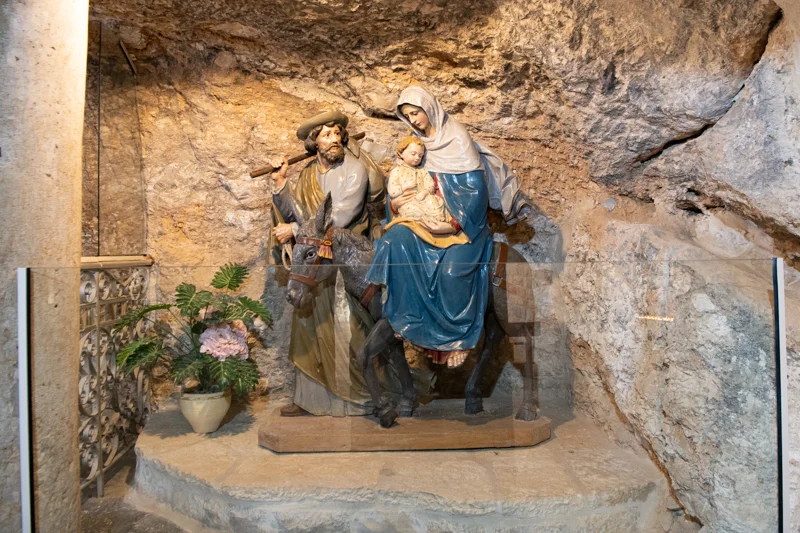
Mary and Joseph didn’t know what would happen. They said yes one step at a time. The shepherds went “without delay” — not because they had understood everything, but because they had heard: “He is born for you.”
For you.
Not for someone else. Not for the perfect. For you.
Who perhaps feel inadequate. Who struggle to find meaning in repetitive days. Who look at the nativity scene with nostalgia for something you can’t define. Who wonder if everything — waking up, working, returning, starting over — truly has meaning.
The answer is yes.
But the question remains: what meaning?
The Concrete Legacy (Starting Monday Morning)
Charlie Kirk won’t be remembered for followers. He’ll be remembered because he lived as if that question — “What do you want to be remembered for?” — was the only one that matters.
And it was. It is.
Monday morning, when we return to work, when we resume routines, when Christmas magic seems distant, that question will be waiting for us.
Not as condemnation. As liberation.
If the answer is clear, every day becomes part of that answer.
The well-designed cabinet becomes space of dignity.
The ergonomic desk becomes concrete respect.
The comfortable chair becomes welcome.
The honest quote becomes embodied truth.
The attentive service becomes lived fraternity.
No miracles needed. Consistency needed.
Don Giussani: “Faith either impacts daily life or it’s not faith, it’s ideology.”
Kirk understood it. Francis testified it. Leo XIV relaunches it. Christmas reminds us.
The Question That Remains (And Saves Us)
We close with Father Andrea Pronzato, quoted by Francis: “Put into our ‘manger’, always too full, a handful of thorns. Put in our souls the desire for something else.”
Something else.
That healthy restlessness. That desire that isn’t satisfied. That question that finds no answer in things, results, achievements.
“How do you want to be remembered?”
If the answer is “for my faith” — as Kirk said — then it starts now.
Not tomorrow. Not after the holidays. Now.
Because the Child we celebrate was born in a manger not for romanticism, but because there was no room elsewhere. He was born outside, at the margin, in emergency.
And right there — in emergency, at the margin, in the daily that doesn’t go as we’d like — He waits for us.
With a question.
And hope, as Leo XIV says quoting Francis, “that does not disappoint.”
QUOTES TO SAVE (share the one that strikes you most):
- “What do you want?” asks consumerism. “What do you want to be remembered for?” asks life. It’s not the same question.
- “Stagnant water is the first to rot. Same goes for lives.”
- “Truth doesn’t divide. Lies divide.”
- “Every job can become craftsmanship of blessing. Even designing a cabinet. Even answering an email.”
- “No miracles needed. Consistency needed.”
- “Christmas celebrates the eruption of the eternal into time. Of God into History. Of ultimate Meaning into daily life.”
Merry Christmas.
And Happy New Year of real questions.
 About Marco Olivieri